Office of the authorized architect : : Leona Kordiš, mag.ing.arch.
Alma Nest
Margareta steps through the door of an apartment that, until recently, was a storage space for other people’s needs.
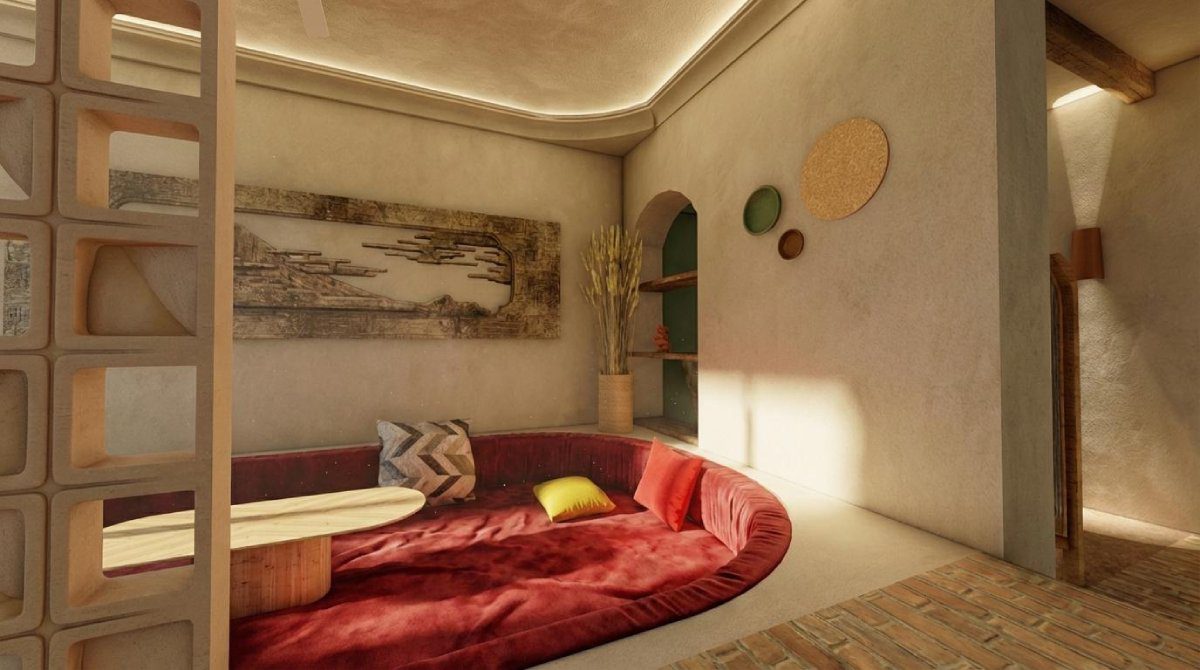
The transition is quiet, yet unmistakable – as if she is stepping into herself. Warm, rounded walls in earthy tones receive her and gently enclose her. There are no sharp edges here, no sense of urgency. She feels that she belongs.
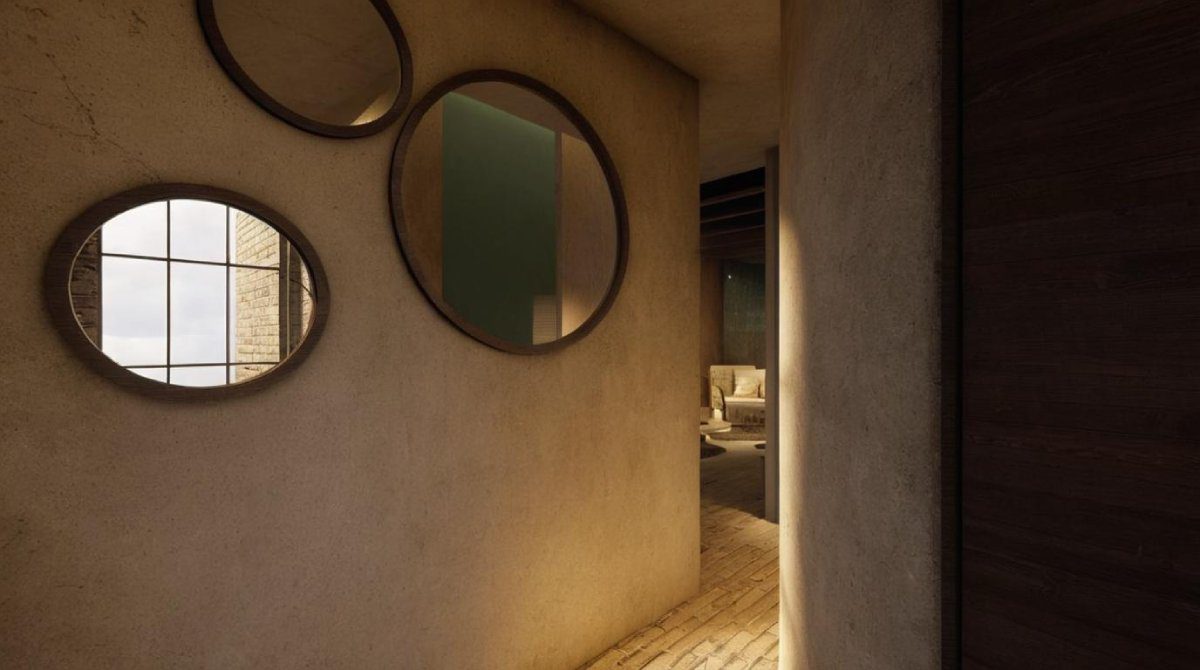
She moves slowly. Her feet touch a floor marked by time, while light glides across surfaces that are not perfect – and precisely because of that, feel alive. The walls respond to the passing day, to shadow, to movement. As if the space is observing her just as much as she is observing it.
This interior was not born from a trend, but from memory. From cities she once passed through, from interiors where people sat low, talked long, and listened carefully. As a sociologist, Margareta observes spaces the same way she observes people — she is interested in how life is lived, how encounters happen, how everyday moments are shared. Different cultures of living are woven into her inner world, and now into this space as well.
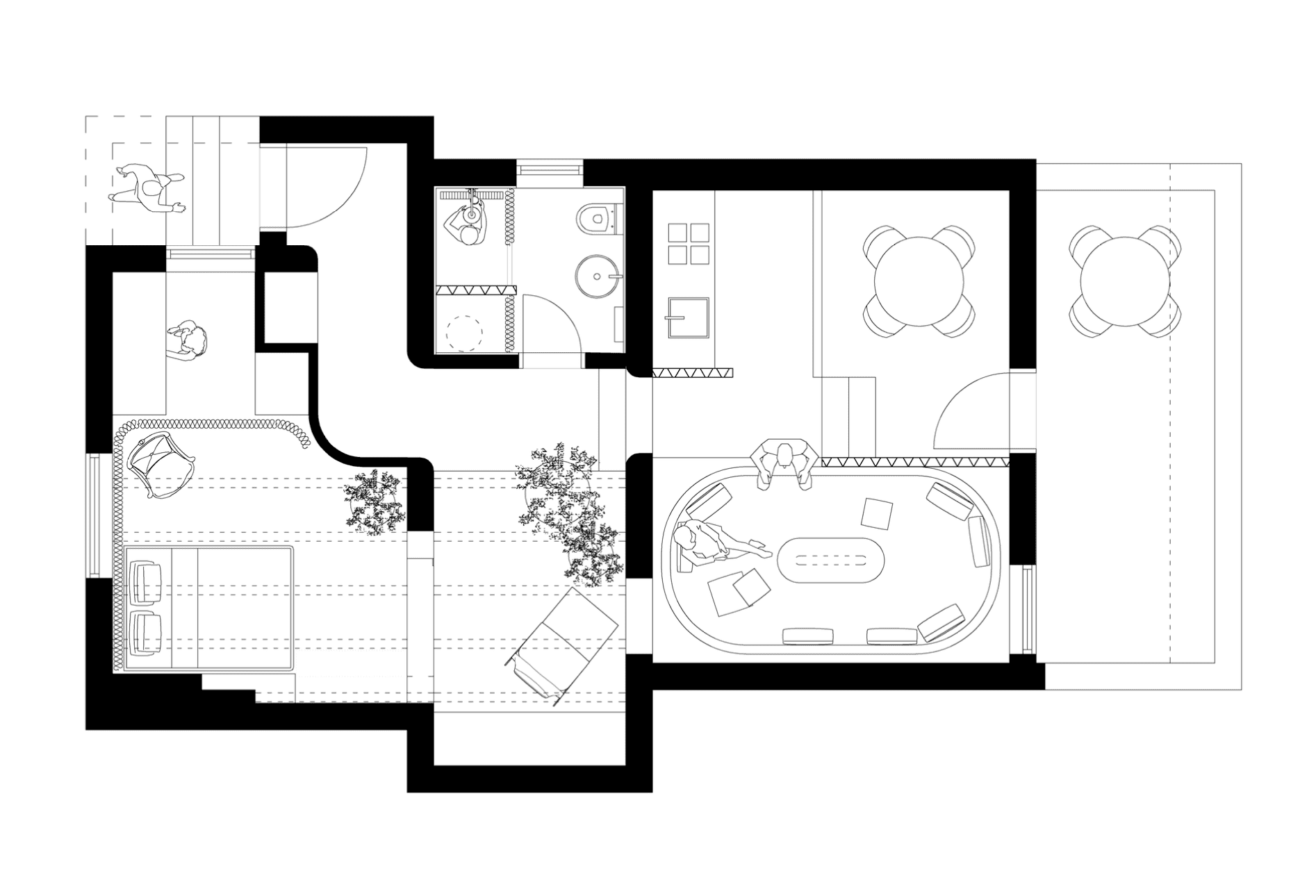
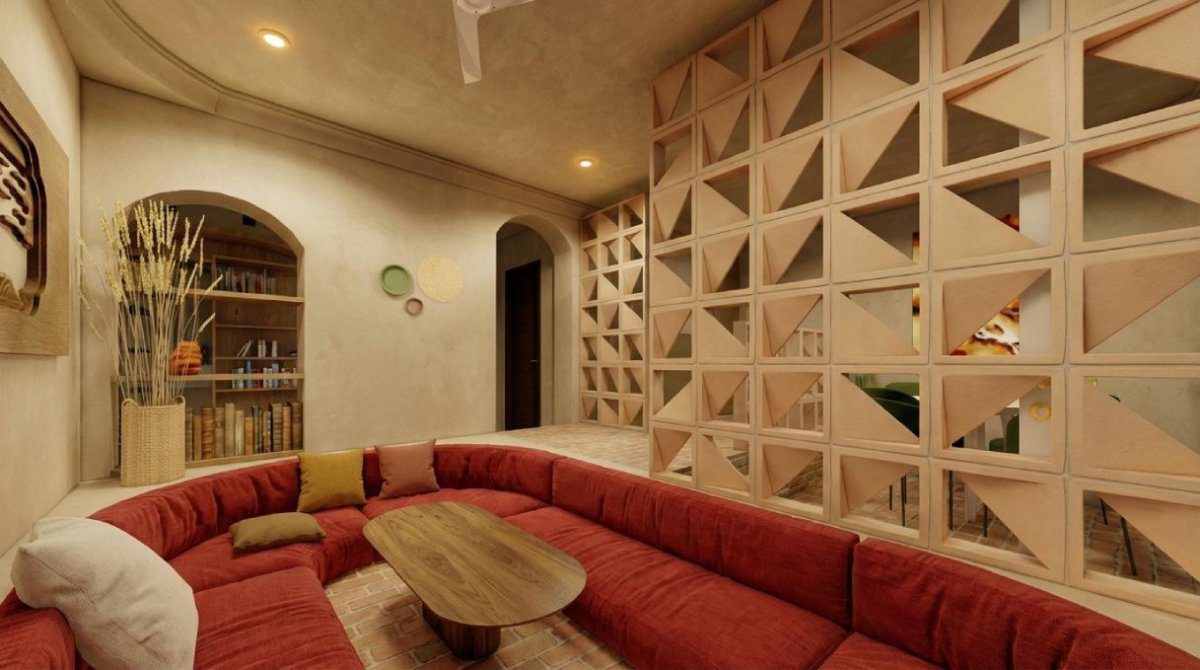
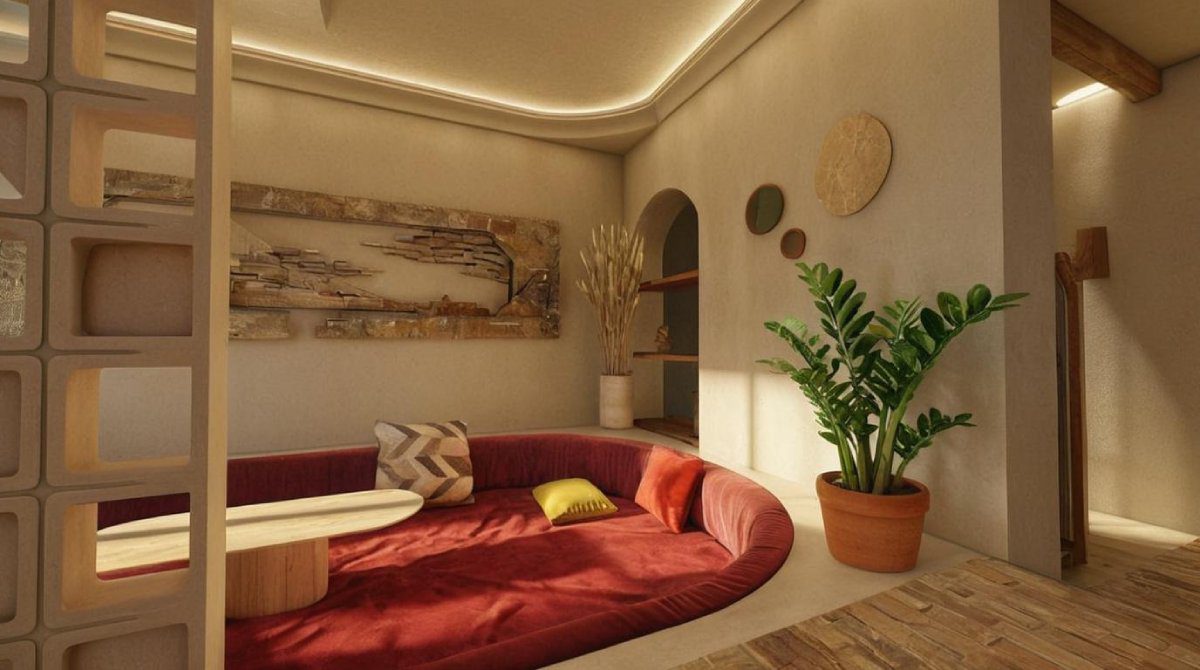
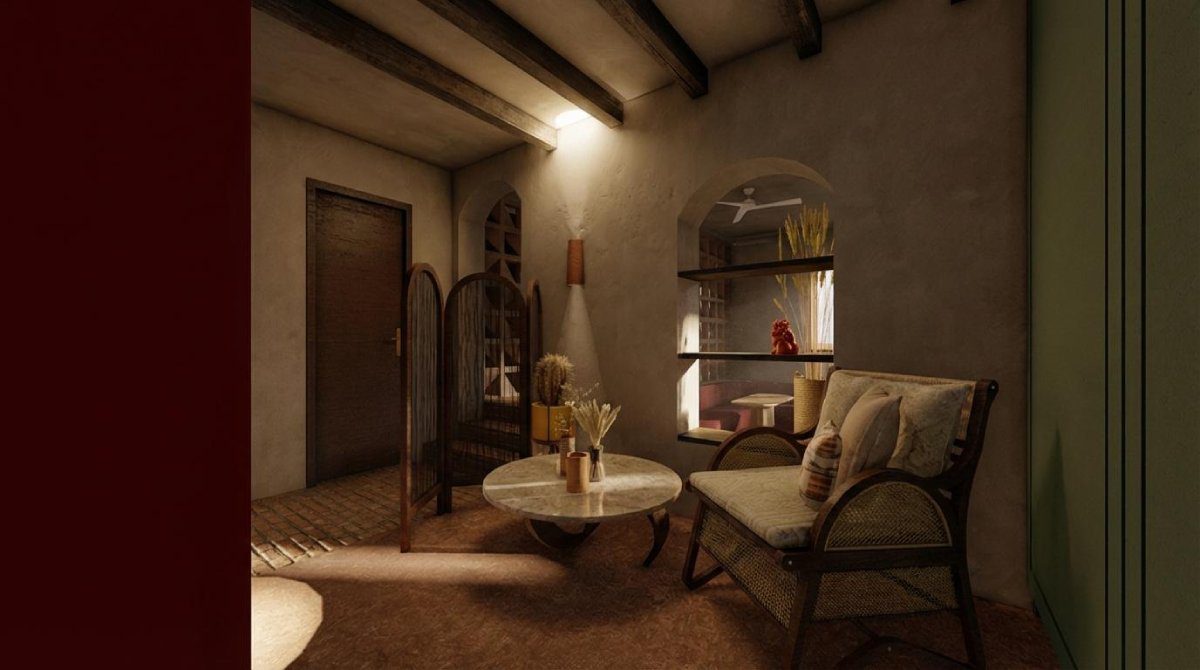
That is why the centre of the home is not defined by a conventional sofa, but by a conversation pit – a sunken seating area that dissolves hierarchy, brings bodies closer, and slows communication. Here, one does not sit opposite someone, but with someone. Conversations become deeper, presence more tangible, and silence as meaningful as words.
Plants appear in the space as well – sparingly, thoughtfully, without decorative excess. Zamioculcas, a plant that prefers half-shade and calm, shares the same conditions as Margareta. It does not demand attention, it does not impose itself, yet it is always there. Its deep green leaves introduce a quiet memory of nature, of continuity and duration – a living element that ages, grows, and remains together with the space.
Directed light reveals the objects that matter to her. Artworks she has collected for years, but never had a place to display. Books waiting for the right moment to be opened – and those she returns to again and again. Souvenirs from journeys, from places where she experienced, saw, felt, and left parts of herself behind.
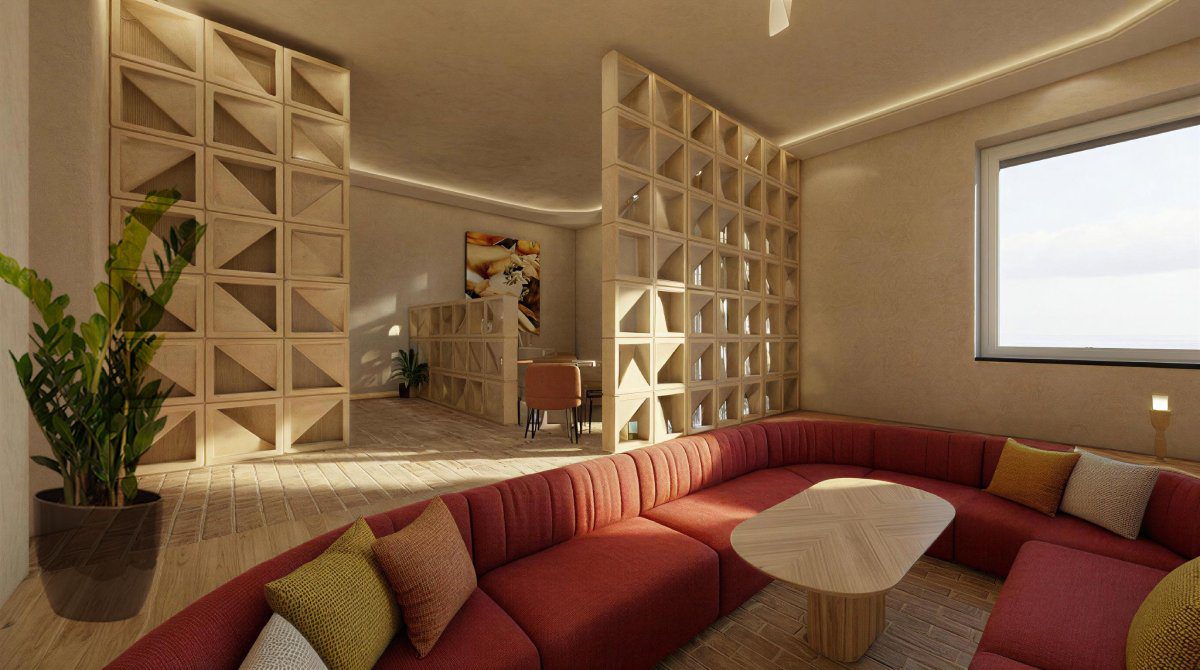
Every passage leads deeper into her mental universe. Low elements invite sitting, lingering, reflection.
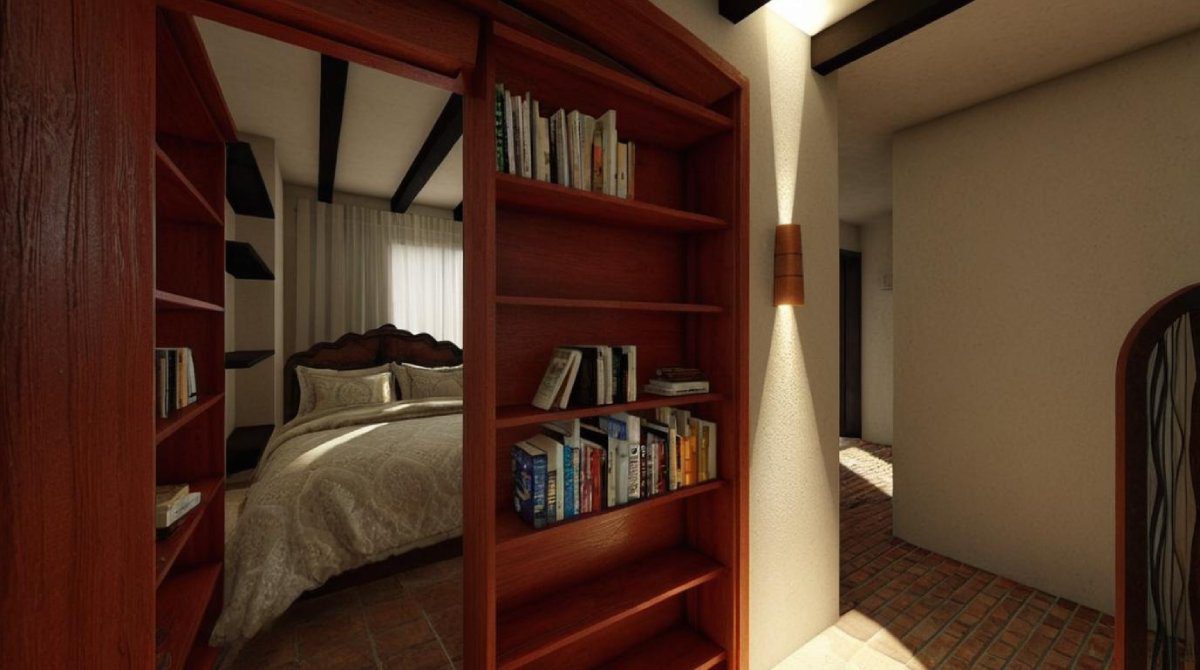
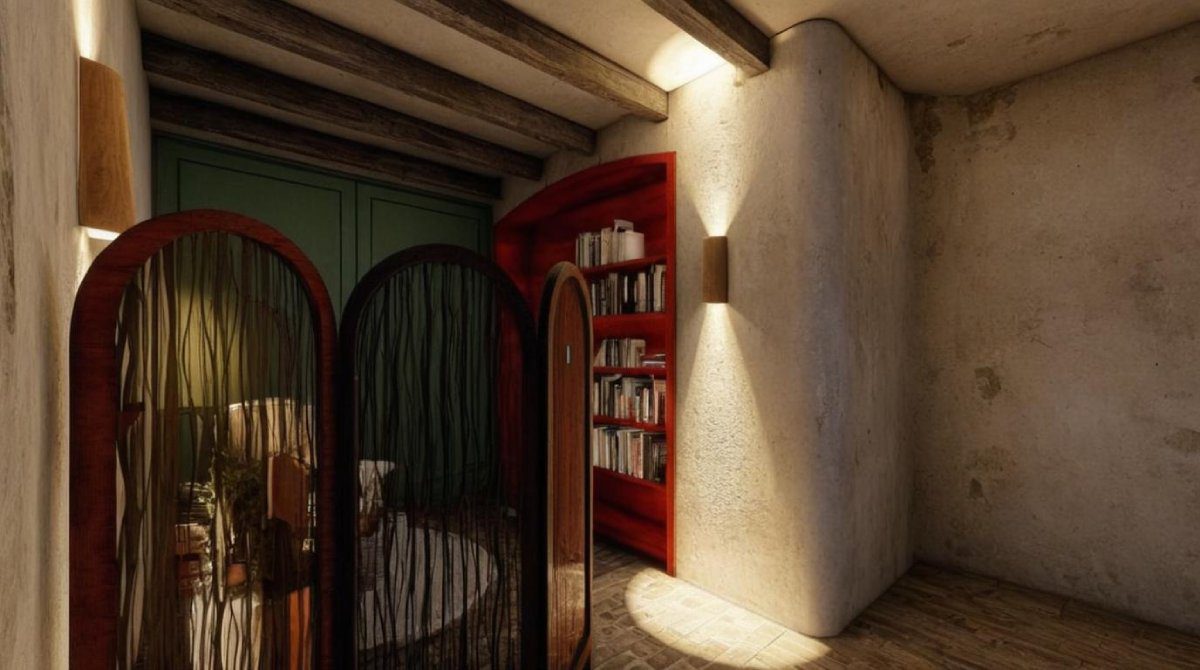
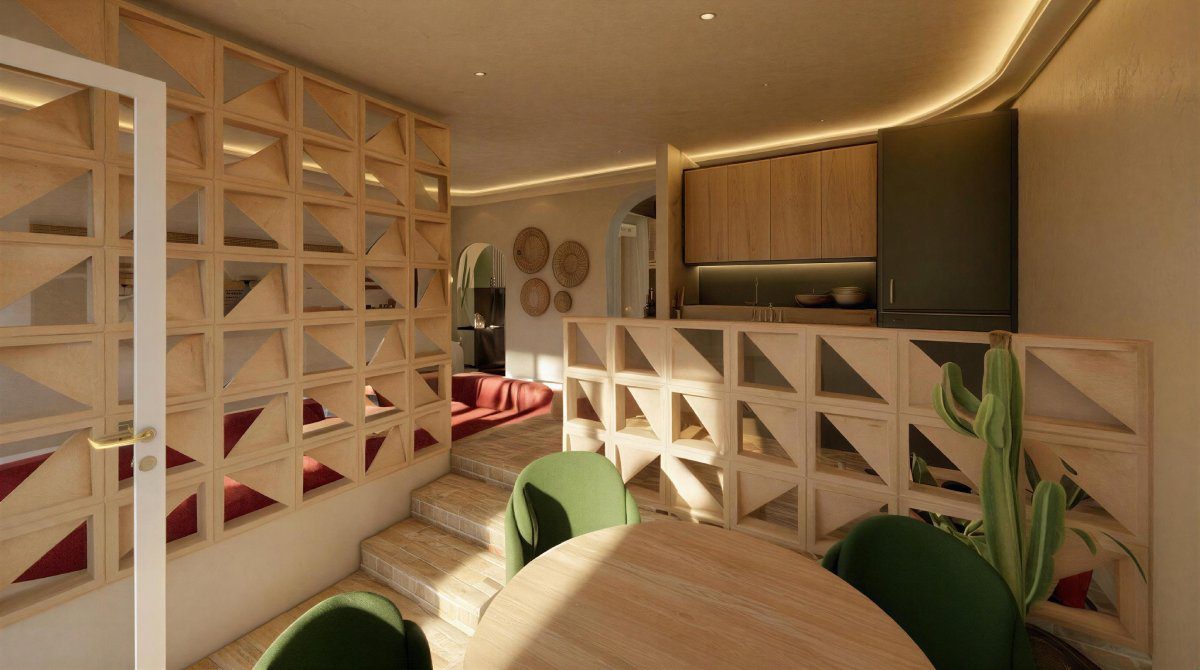
Behind the secret doors of her library – a bookshelf that conceals more than it reveals – an even more intimate layer of the home unfolds: a room with a Moroccan bed and a spacious wardrobe. It is a place not meant for everyone, but only for moments when she is ready to retreat further inward.
Perforated structures cast shadows that slowly shift, reminding her that time here is not an enemy. This is a space where there is no need to rush.
Here, she can create, read, dream, and remember. She can be curious, quiet, playful, or withdrawn. She can love, search, discover the new – or return to what she already carries within.
This is a place where she can be who she is, without anyone watching from beneath raised brows.
A place that asks for no explanations.
A place that listens – and sometimes quietly responds.
Biophilic elements of this interior:
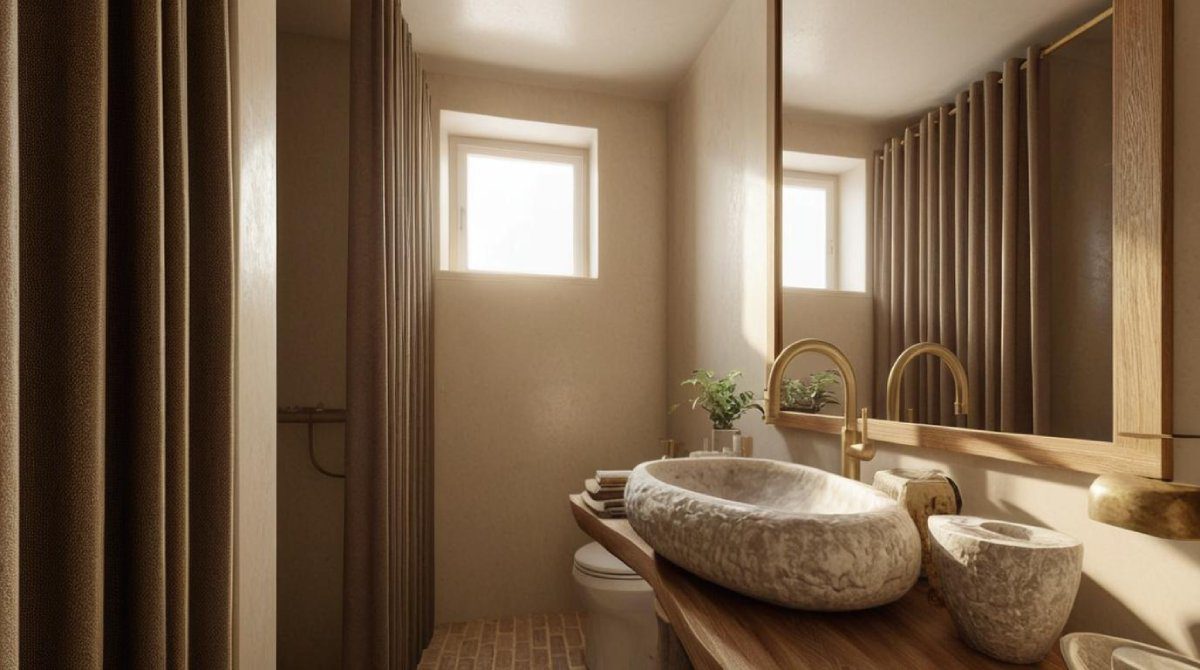
: : Natural materials and tactile surfaces
: : Imperfection and natural variation
: : Psychological safety and a sense of refuge
: : Slowness, presence, and rhythm of inhabitation
: : Connection to nature through culture and ways of living
: : Living elements – statement plants
: : Motifs of nature through artworks and objects