Office of the authorized architect : : Leona Kordiš, mag.ing.arch.
In the Shade of the Pergola
The house in Pridraga is conceived as a contemporary interpretation of Mediterranean living, in dialogue with the landscape and the sloping terrain. Positioned on a plot bordered by roads on three sides, the house turns away from traffic and opens inward, towards a protected garden and sheltered outdoor spaces, creating a calm and intimate environment within a clearly defined boundary.
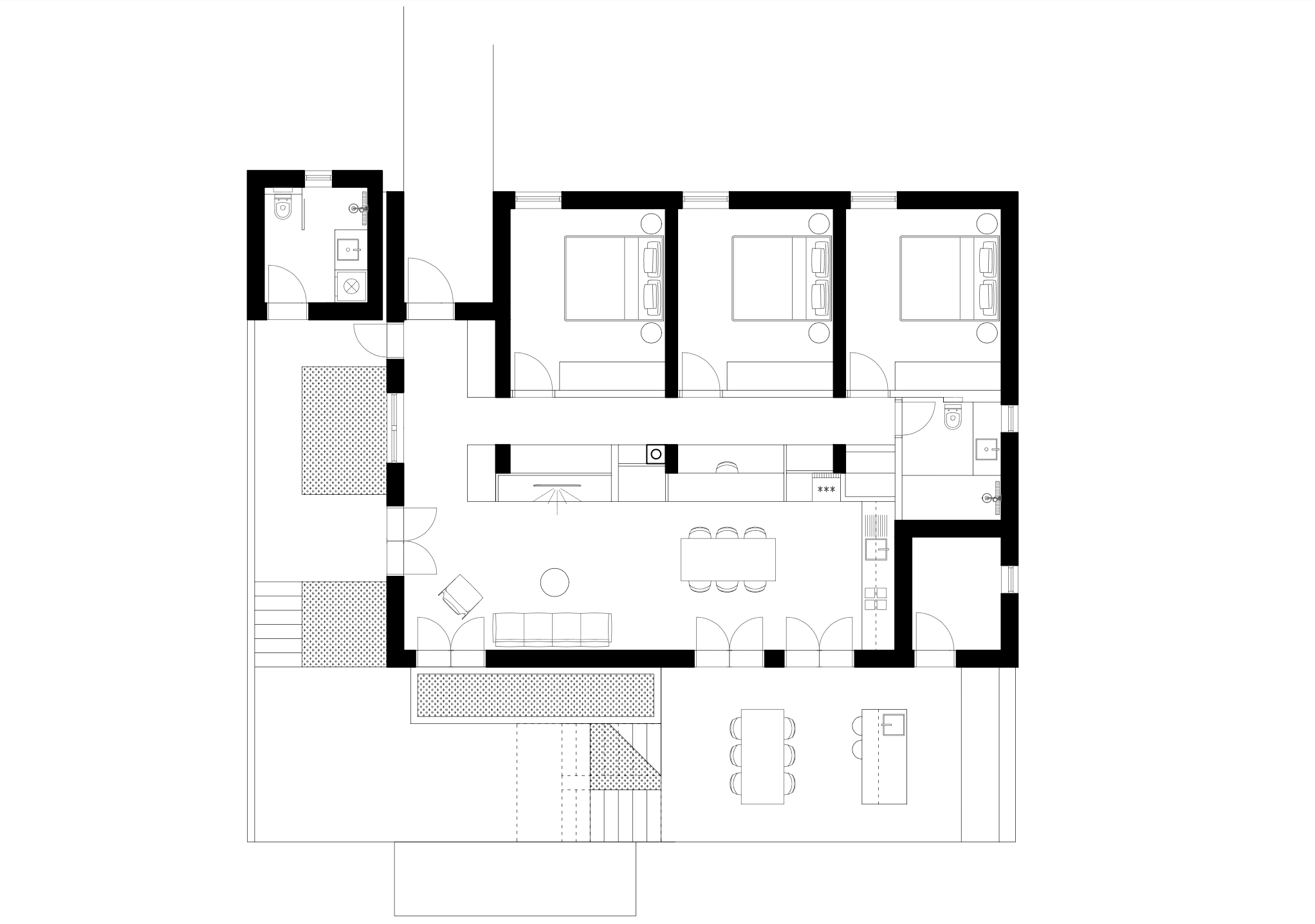
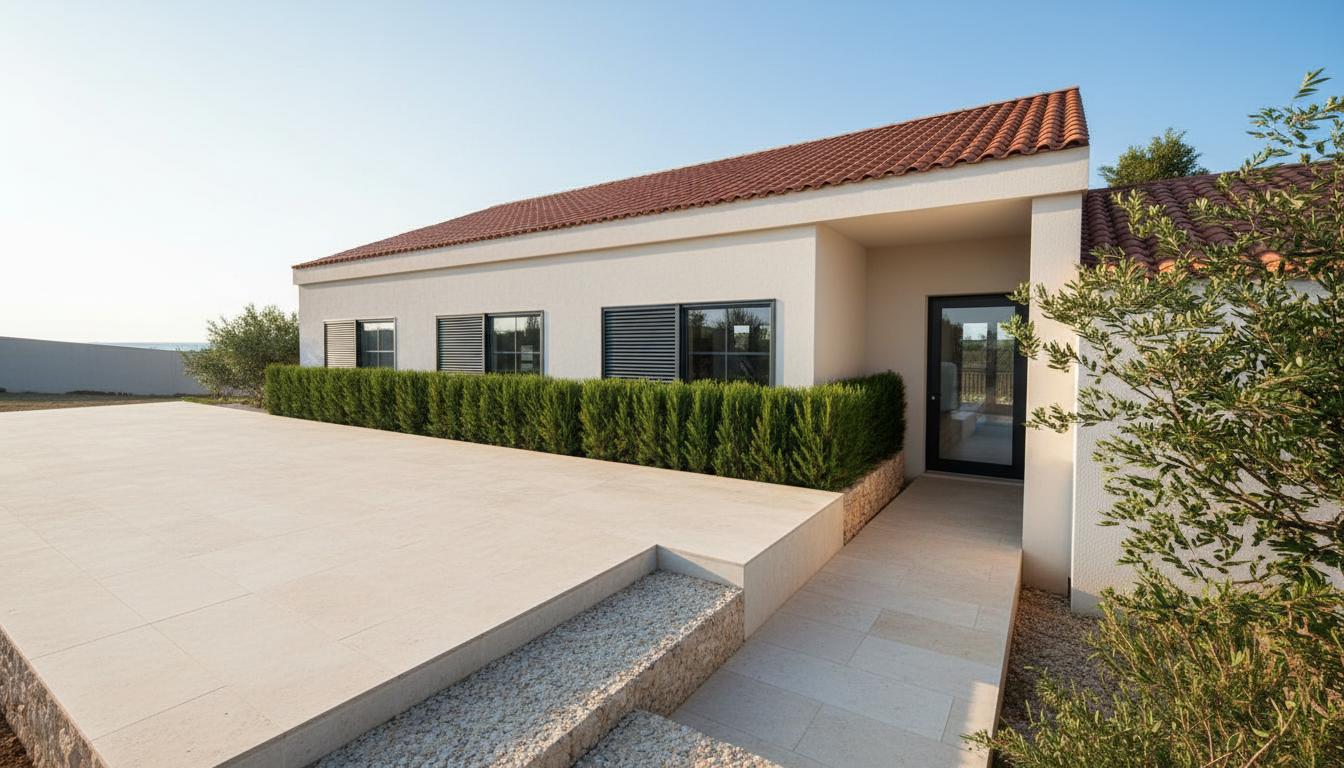
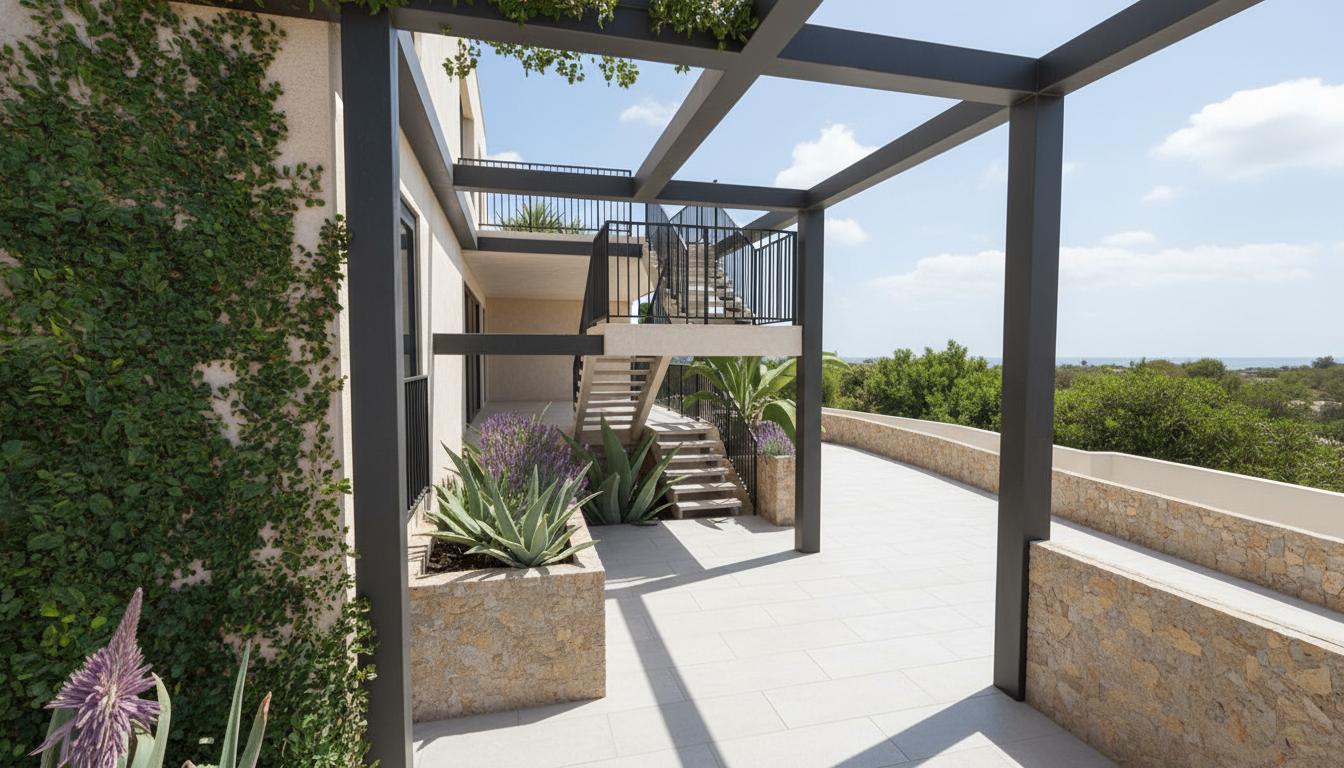
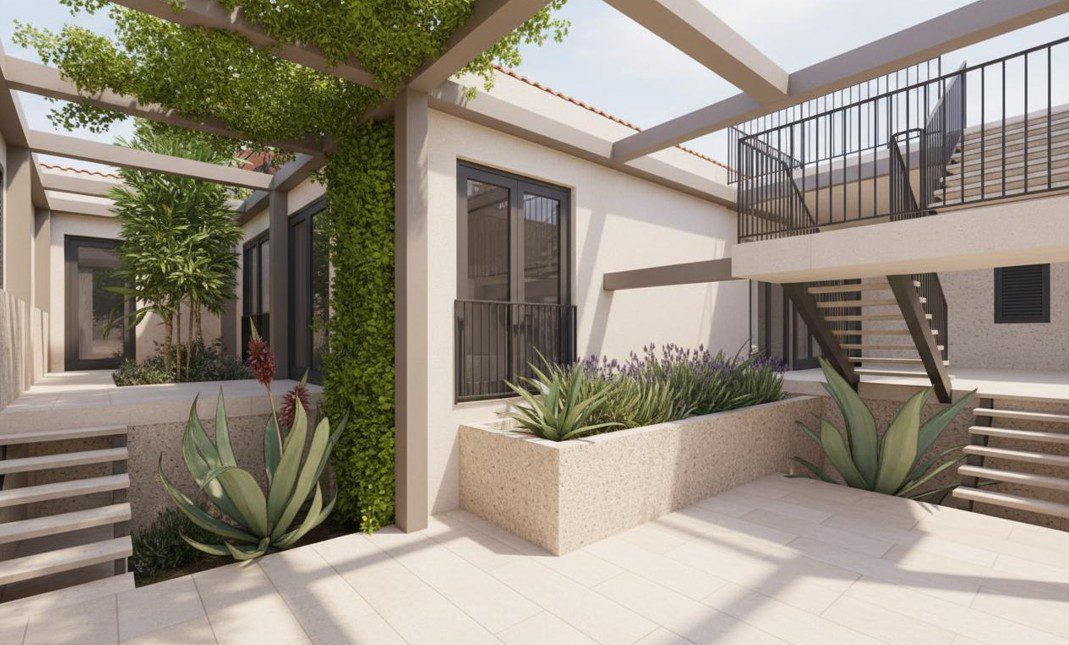
The primary volume of the house is simple and restrained, with a gabled roof that references local building traditions. This basic form is complemented by contemporary elements: pergolas, external staircases, and terraces that follow the natural slope of the site and enable a layered use of outdoor space. The covered terrace and pergola are not additions to the house, but integral parts of it – an extension of the living area and a transitional zone between interior and landscape.
The pergola draws the garden inward, while the terrace gradually dematerializes, stepping down in height and merging with the external staircase that leads to the rooftop terrace, offering views towards the sea.
The interior layout is based on a clear distinction between private and living areas, yet without rigid, conventional boundaries. Between the bedroom corridor and the living space there is no ordinary wall, but a multifunctional partition that accommodates built-in storage, an integrated fireplace, and a workspace. This partition becomes an active architectural element – a spatial filter that connects functions rather than merely separating them. Through it, daylight from the dining area is filtered into the corridor, visually and atmospherically linking the interior spaces.
Materials were selected with durability, neutrality, and contextual integration in mind: light plastered façades, stone retaining walls, and a dark metal pergola create a balanced contrast between solidity and lightness, tradition and contemporary expression. Greenery is embedded into the architecture through raised planters, climbing plants, and Mediterranean vegetation, allowing the house to gradually merge with the terrain over time.
The house in Pridraga is not conceived as an object that dominates its surroundings but as architecture that calmly adapts to its context, enabling a high-quality and sustainable way of living within the Mediterranean landscape.
Biophilic elements of this project?
: : Filtered natural light within the interior
: : Visual and spatial continuity between interior and exterior
: : Integration of greenery into interior spaces
: : Use of natural materials and tactile surfaces
: : Visual depth and layered interior perspectives
: : Spatial zoning through soft transitions rather than hard partitions
: : Natural ventilation and passive microclimate control
: : Changing light conditions throughout the day
: : Connection to outdoor views and natural surroundings
: : Sense of enclosure combined with openness and permeability